Nara in a Day: Meet the Deer, Face the Great Buddha
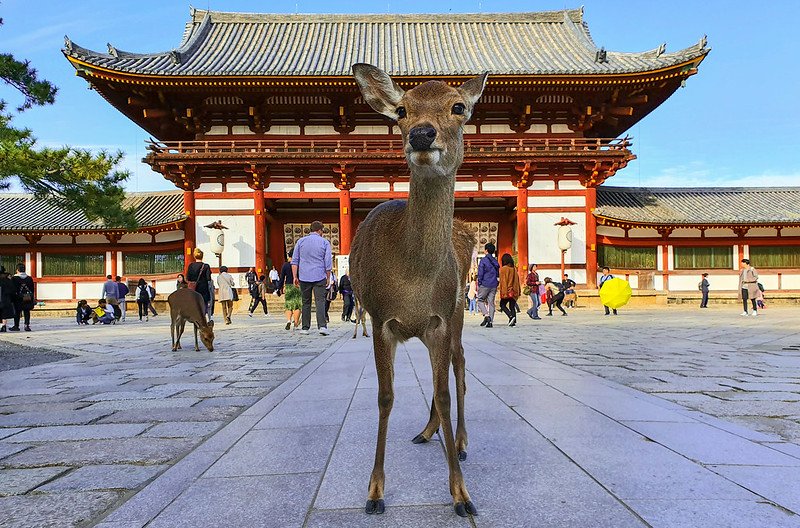
Before Kyoto, there was Nara — Japan’s first permanent capital, founded in 710, and still the gentlest of the old cities. Its great temples stand in and around an enormous park where more than a thousand deer wander free, bowing to visitors and stealing maps. It’s under an hour from both Kyoto and Osaka, and it makes the easiest great day trip in the region.
At a glance
- Time needed: Half a day at minimum; a full day is better
- Getting there: About 45 minutes from Kyoto or Osaka (Kintetsu line is closest to the park)
- Best season: Year-round; November maples and spring blossom are lovely
- Don’t miss: The Great Buddha at Tōdai-ji, feeding a bowing deer, Kasuga Taisha’s lanterns
Tōdai-ji and the Great Buddha
The Daibutsuden of Tōdai-ji is one of the largest wooden buildings on Earth — and it exists to house a single statue: a bronze Great Buddha about 15 metres (49 feet) tall, cast in the 8th century and still seated in meditation. Approach through the Great South Gate, flanked by two towering guardian kings carved in 1203, and let the scale build slowly. Inside, find the pillar with a hole at its base, said to match the size of the Buddha’s nostril. Children squeeze through for luck; adults mostly take photos and quietly do the maths.
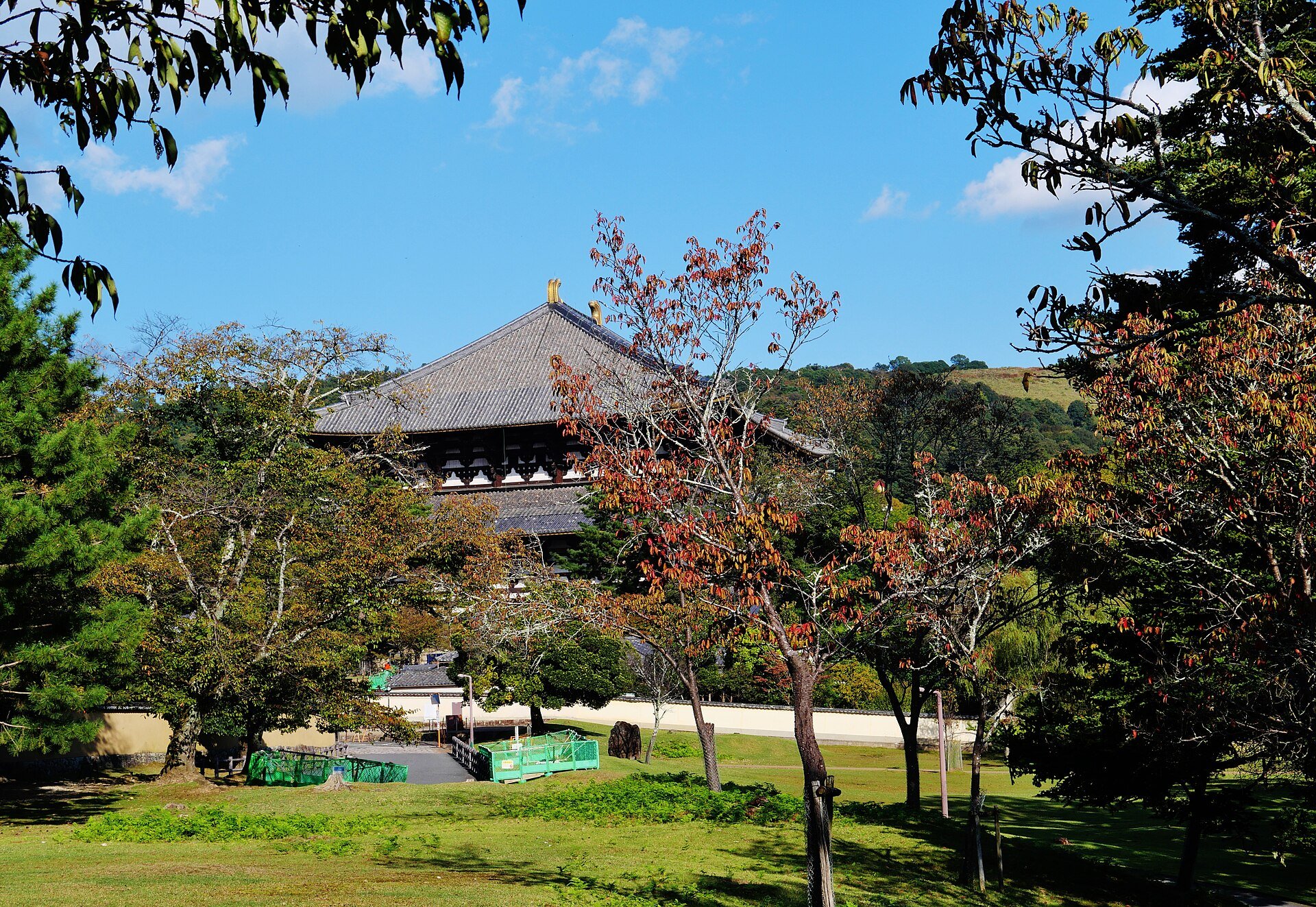
The deer of Nara Park
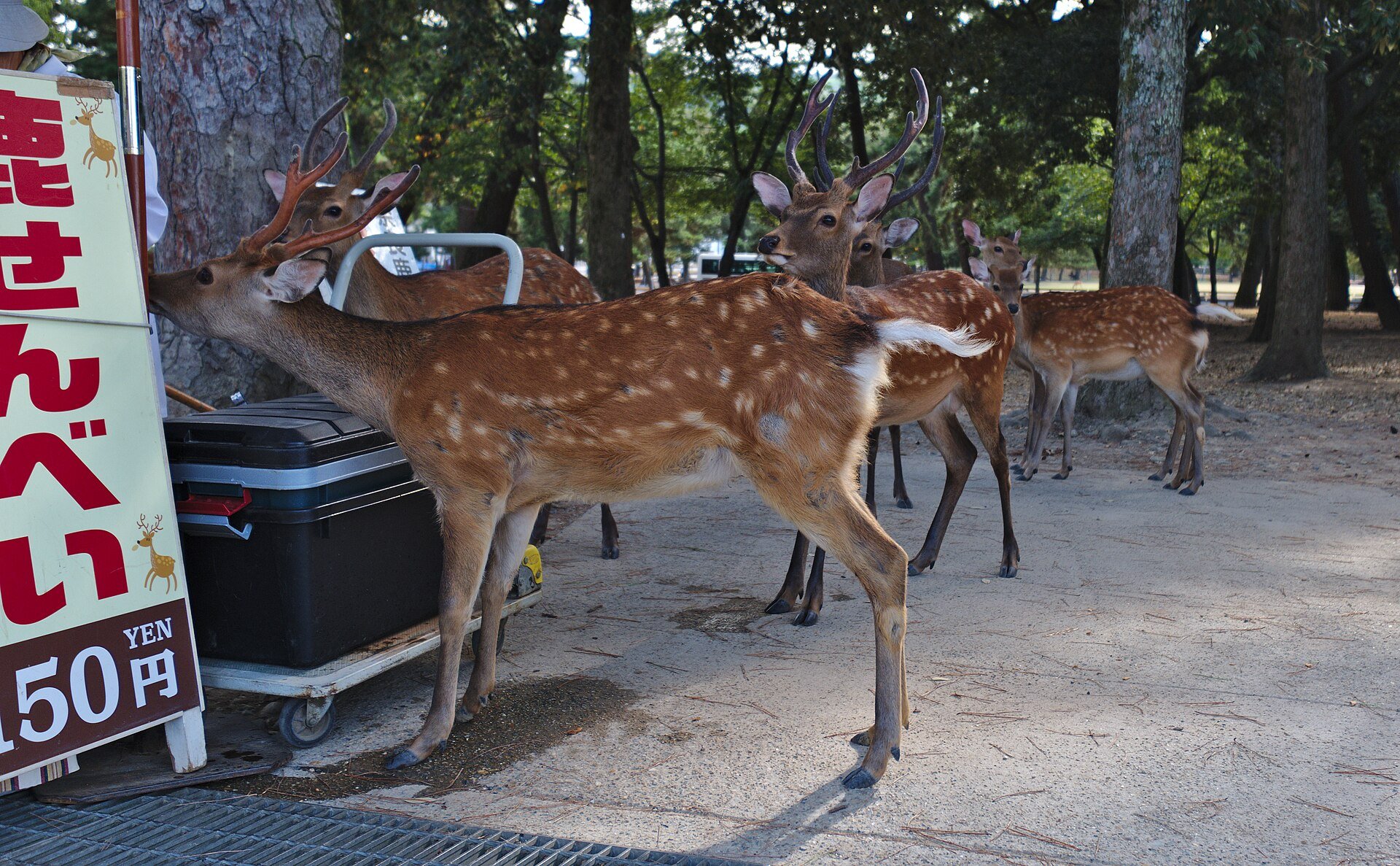
The deer are the park’s residents and, by tradition, sacred messengers of the gods of Kasuga Shrine — protected for well over a thousand years. Buy a pack of shika senbei, the official deer crackers sold at stalls around the park, and expect an audience within seconds. Many deer have learned to bow before being fed, a trick they perform with great dignity and no patience whatsoever. Feed promptly, show your empty palms when you run out, and keep loose paper — maps, tickets, crackers — out of range of the pushier teenagers of the herd. They are wild animals, however good their manners look.
Kasuga Taisha and the old town
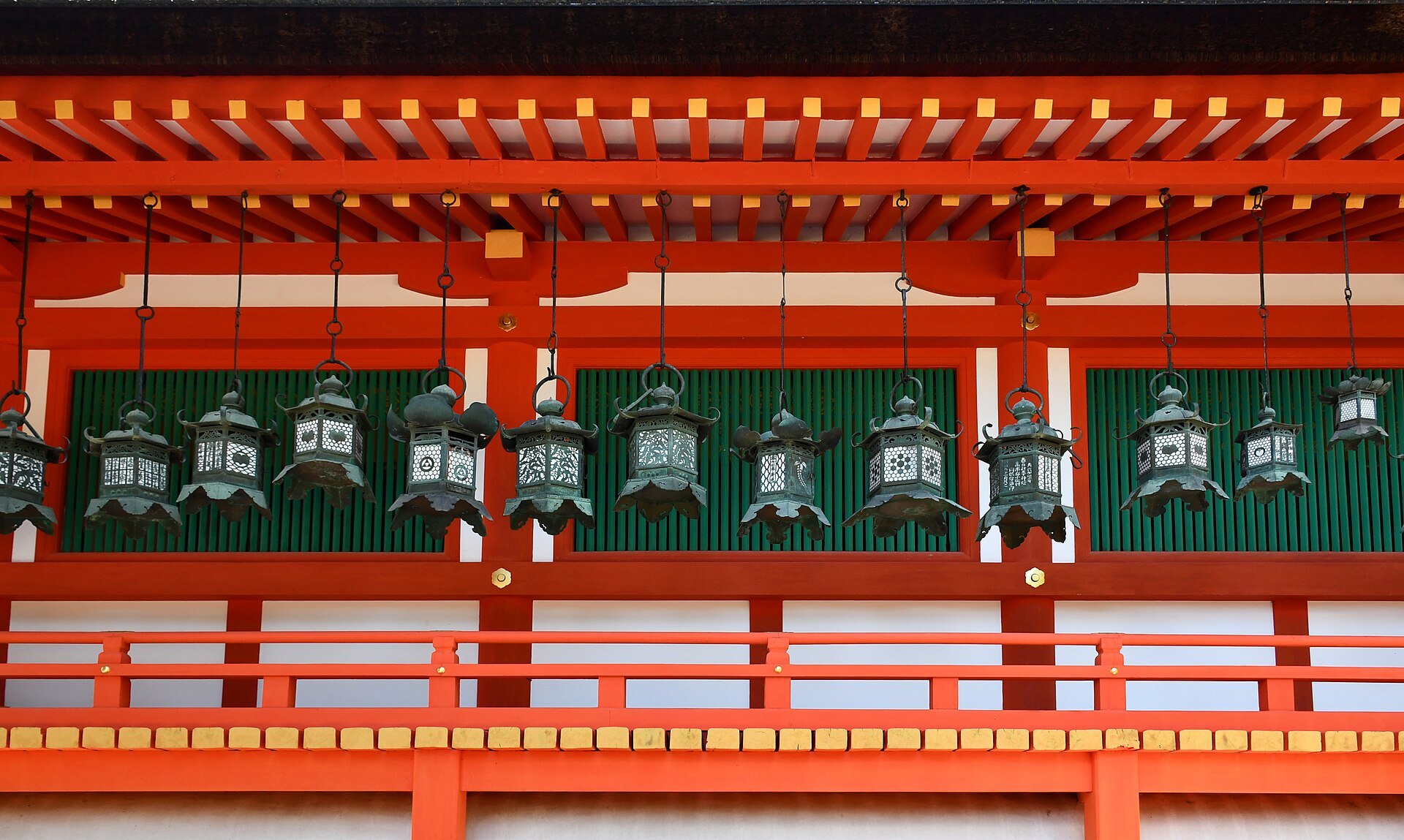
From the park’s eastern edge, a path lined with mossy stone lanterns climbs through forest to Kasuga Taisha, a shrine famous for its thousands of donated lanterns — bronze ones hang in rows inside the halls, stone ones crowd the approach. Twice a year, in February and August, every lantern is lit at once; on any other day, one dark hall is kept candle-lit so you can feel the effect. On the walk back, detour through Naramachi, the old merchant quarter of wooden townhouses, sake shops, and small cafés — the right place for a late lunch before the train.
Good to know
- Take the Kintetsu line: Kintetsu Nara Station is a five-minute walk from the park. JR Nara Station is a pleasant 15-minute walk or a short bus ride.
- Go in the morning. The deer are hungriest, the crowds thinnest, and the light on the Great South Gate is at its best.
- Deer crackers are sold only inside the park area — buy them there rather than bringing other food, which the deer will find anyway.
- Nara pairs naturally with a Kyoto base: do it as the day trip between your Kyoto days, not as an afterthought at the end.
Sources & photo credits
- Tōdai-ji Daibutsuden — Zairon, CC BY 4.0, via Wikimedia Commons
- Nara deer — Steffen Flor, CC BY-SA 2.0, via Wikimedia Commons
- Kasuga Taisha lanterns — Gzzz, CC BY-SA 4.0, via Wikimedia Commons