Kamakura in a Day: The Great Buddha and the Sea
Kamakura was Japan’s capital for a century and a half, and it still feels like a city built around its shrines rather than its stations. The Great Buddha sits in the open air in a quiet residential neighbourhood. A bamboo grove hides behind a small Zen temple a bus ride from the station. And the whole city is an hour from Tokyo by direct train, which makes it the easiest great day trip in Japan — a morning of temples, a lunch of whitebait rice bowls, and a sunset on the beach, all without changing trains more than twice.
At a glance
- Time needed: A full day, roughly 8:00 to 17:00
- Getting there: JR Yokosuka Line, Tokyo Station → Kamakura, about 56 minutes, ¥1,034 with an IC card
- Best season: Year-round; late March–April for cherry blossom, November for autumn leaves, June for hydrangeas at Hasedera
- Don’t miss: The Great Buddha at Kōtoku-in, the sea view from Hasedera’s terrace, matcha in the bamboo grove at Hōkoku-ji
Morning: the shrine and the shopping street
8:00 — Tsurugaoka Hachimangu. Start at the shrine Kamakura was built around. Minamoto no Yoritomo moved Hachimangu to this hillside in 1180, when he made Kamakura the seat of his shogunate, and the city still runs on the axis he laid out: a straight avenue, Wakamiya-oji, from the shrine’s great torii all the way to the sea. The grounds are free and open from 6:00 to 20:00, so come early and you can climb the Great Stone Steps to the main hall — rebuilt in 1828 after a fire — before the tour groups arrive. From the top, the avenue runs dead straight to the beach, and the two ponds below tell a story in their islands: three on the Genji side, four on the Heike side. The Treasure Hall, tucked into the western corridor, costs ¥200 and opens at 9:00. Allow 45 minutes, longer if you stop for the peony garden in season.
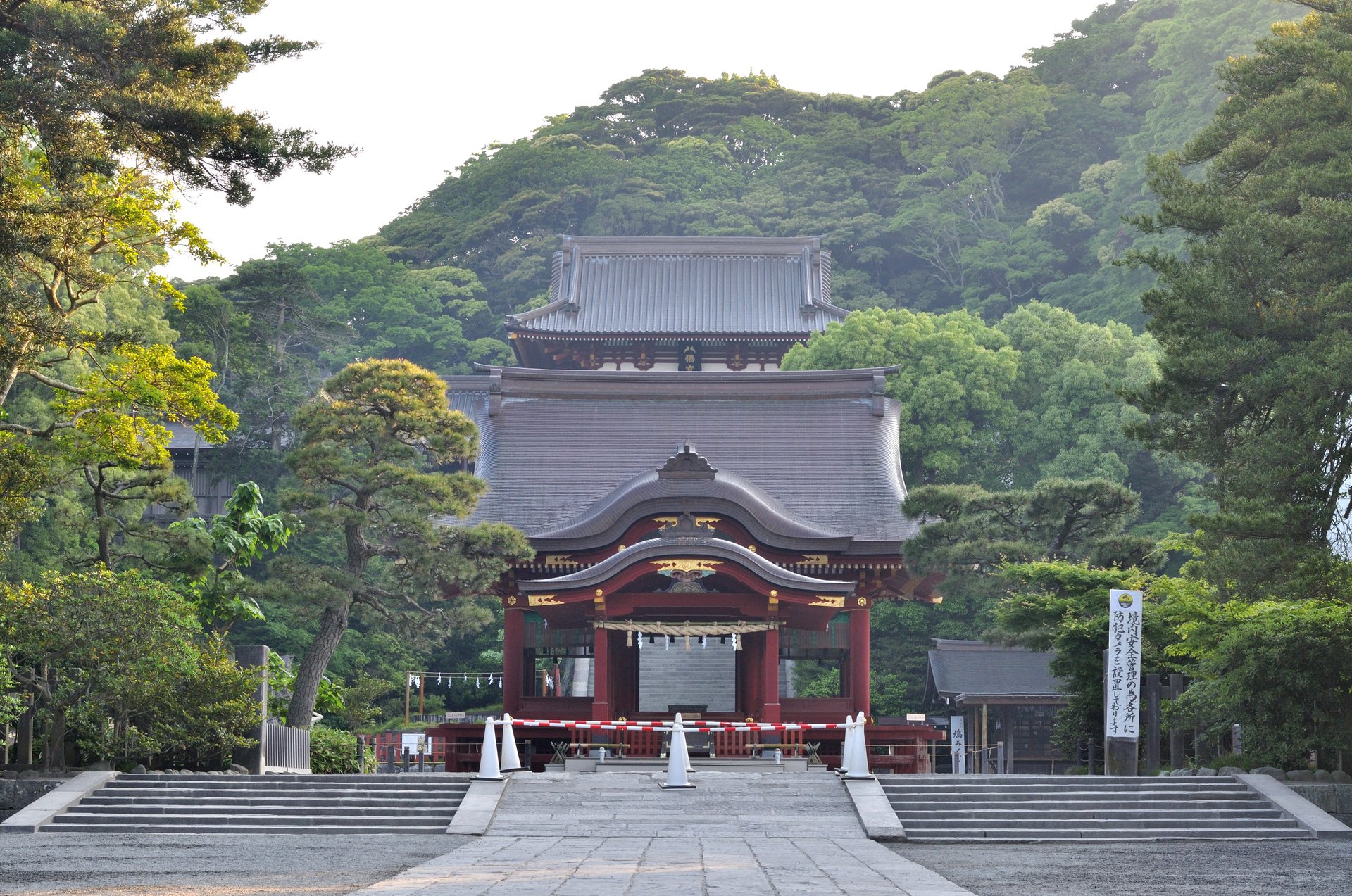
9:00 — Komachi-dori. Walk back down Wakamiya-oji toward the station and turn onto Komachi-dori, the narrow shopping street that runs from the station’s east exit to the shrine. It is the place for breakfast: bakeries, coffee stands, and shops selling Kamakura’s local speciality, shirasu — tiny whitebait, served raw, boiled, or on rice. The street fills up by late morning, so eat early and browse while the shopkeepers are still setting out. Pick up a snack for later, but save your appetite: lunch in Hase is the better meal.
10:00 — Ride the Enoden to Hase. From Kamakura Station, take the Enoden — the little green-and-cream railway that runs along the coast to Fujisawa. Hase is two stops and about four minutes away, and the fare is ¥200. Tap an IC card rather than buying the line’s Noriorikun day pass: the pass costs ¥800 and only pays off at four rides or more, while this day needs two or three. The train itself is part of the experience — a two-car tram that squeezes between houses, crosses the road, and then runs right along the sea.
Late morning: Hasedera and the Great Buddha
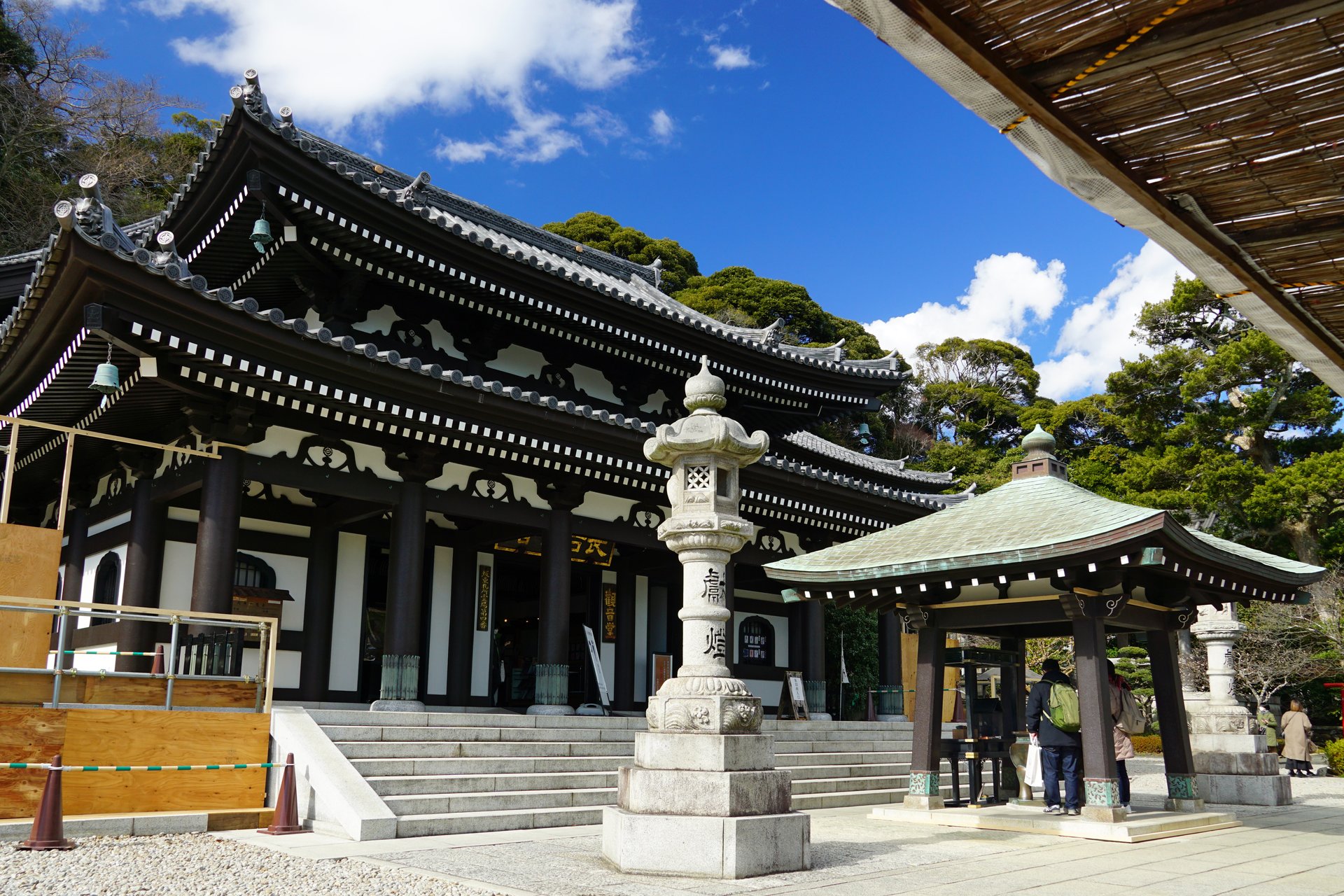
10:15 — Hasedera, the temple on the hill. Hasedera sits five minutes on foot from Hase Station, and it rewards the climb. Founded in 736, it is built up a hillside in terraces, and its main hall holds an 11-headed Kannon statue 9.18 metres tall, gilded wood, and one of the great Buddhist images of Japan. The terrace in front of the hall looks out over the town to Yuigahama Beach and, on a clear day, across Sagami Bay to the Miura Peninsula. Below the hall, a winding cave — the Benten-kutsu — is carved with stone figures and lit by candles. Admission is ¥400 for adults and ¥200 for children, and the gates open at 8:00, closing at 17:00 with last entry at 16:30. In June the hydrangea path needs a separate ¥500 timed ticket, and in late autumn the temple opens again after dark: in 2026 the maple light-up runs from 21 November to 6 December, from sunset until the gate closes at 19:00, at the normal admission. Allow about an hour, longer in June.
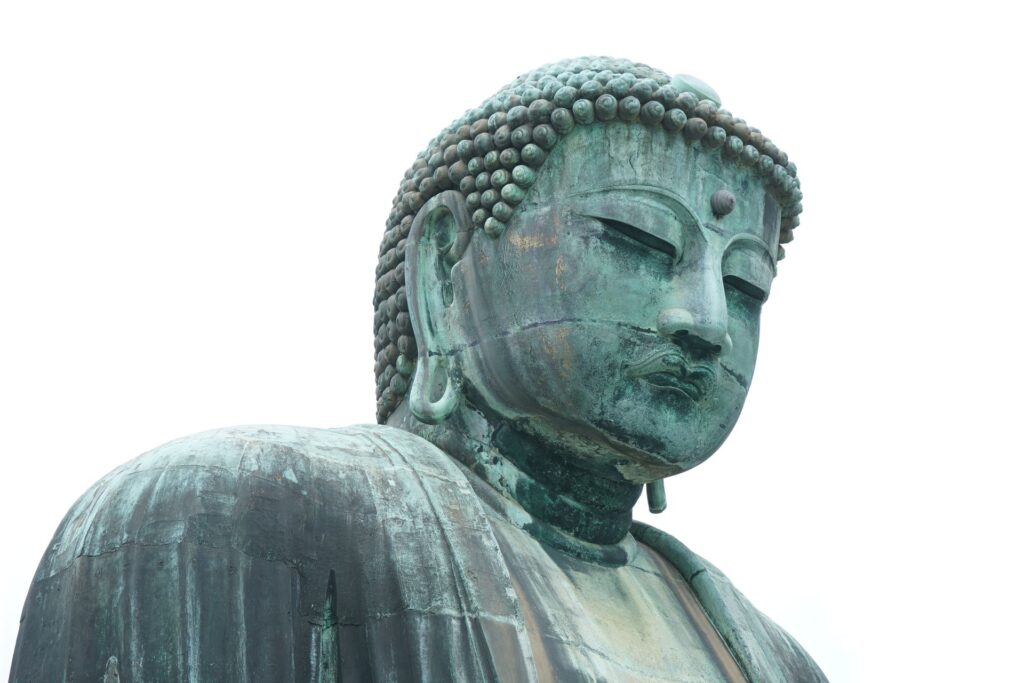
11:30 — The Great Buddha at Kōtoku-in. Walk seven minutes from Hasedera and you reach the reason most people come to Kamakura. The Great Buddha is a bronze Amida about 11.3 metres tall and roughly 121 tonnes, cast from 1252 and designated a National Treasure. It has sat in the open air for centuries: the hall that once sheltered it was damaged by great storms in 1334 and 1369 and destroyed in the earthquake of 1498, and it was never rebuilt. That is why the view comes with sky. Admission is ¥300 for adults and ¥150 for children, and the grounds open at 8:00, closing at 17:30 from April to September and 17:00 from October to March. For ¥50 more you can climb inside the hollow statue, from 8:00 to 16:30 year-round — one of the best bargains in Japan, standing inside the casting seams of a medieval bronze. Go at opening time or after 15:00, when the courtyard is briefly quiet.
12:30 — Lunch in Hase. Eat near Hase Station, where the small restaurants serve the town’s signature dish: shirasu-don, a bowl of rice topped with whitebait, often with a raw egg and seaweed. A set lunch costs roughly ¥1,200 to ¥2,000. The streets around the station are quieter than Komachi-dori, and the cafes here are the right place to sit down for an hour before the afternoon.
Afternoon: the bamboo grove
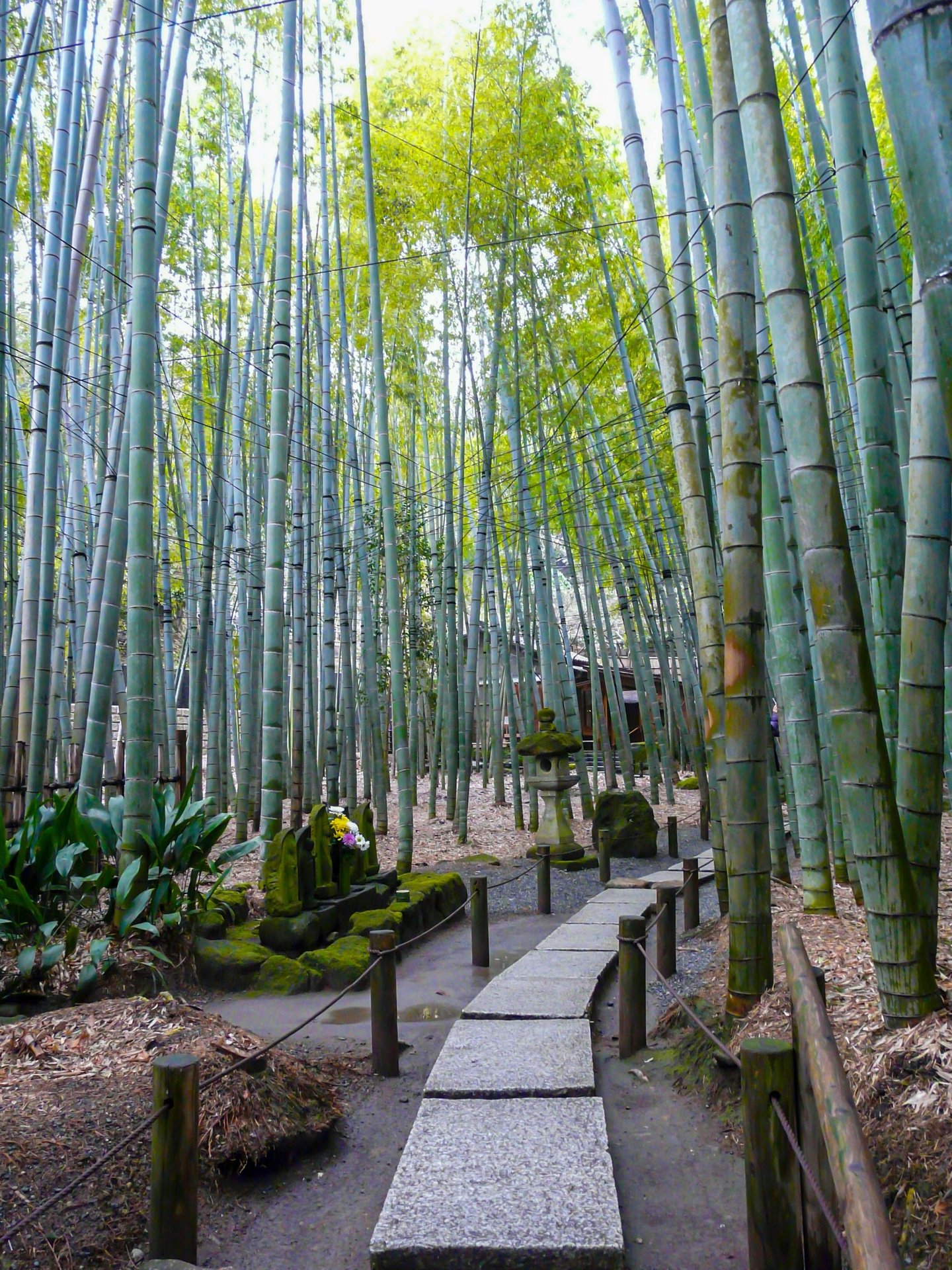
13:30 — Hōkoku-ji, the bamboo temple. Ride the Enoden back to Kamakura Station and take a bus from the east exit to the Jōmyōji stop, about 12 minutes, then walk three minutes to Hōkoku-ji. If you would rather walk, it is about 35 minutes from the station through the eastern temple district. Hōkoku-ji is a small Zen temple founded in 1334, and behind its main hall grows a garden of about 2,000 moso bamboo, with a stone path running through the stalks and moss-covered rocks along the way. Admission is ¥400, and the garden is open from 9:00 to 16:00, closed from 29 December to 3 January. The thing to plan is the tea: at Kyukoan, the tea house inside the bamboo garden, you can sit on chairs and drink a bowl of matcha with a dry sweet, looking out over the grove. The matcha ticket costs ¥600 on top of admission, and you buy it at the entrance with your entry ticket — sales stop at 15:30, and earlier when the tea house is full, so decide before you go in. Allow an hour, more if you take tea.
15:30 — Back toward the station. From Hōkoku-ji, walk back through the eastern district if you have the energy: the streets here are quiet, with small temples and old houses, and the walk takes you past the approach to the shrine from the other side. If your legs are tired, the bus returns to Kamakura Station the way it came.
Golden hour: Yuigahama Beach
16:00 — Sunset on the beach. End the day where Kamakura’s avenue ends. Yuigahama is the city’s main beach, a ten-minute walk south from Kamakura Station, or one stop on the Enoden to Yuigahama Station. In late autumn the sun sets around 16:30, and on a clear winter day the view runs from Enoshima island on the right to Mt. Fuji on the left — the reason the beach is busiest at this hour even when nobody is swimming. Walk the sand, watch the surfers, and then catch the train back: the last direct JR train to Tokyo leaves Kamakura at about 22:53 on weekdays, so there is no rush, and the station area has plenty of places for dinner if you want one more hour in the city.
Budget for the day
Per person, including the return train from Tokyo.
| Item | Cost |
|---|---|
| JR Yokosuka Line, Tokyo ⇄ Kamakura (IC card) | ¥2,068 |
| Enoden singles, Kamakura ⇄ Hase | ¥400 |
| Hasedera | ¥400 |
| Great Buddha (Kōtoku-in), including inside the statue | ¥350 |
| Hōkoku-ji bamboo garden | ¥400 |
| Matcha at Kyukoan | ¥600 |
| Shirasu-don lunch | about ¥1,500 |
| Snacks, coffee and the bus to Hōkoku-ji | about ¥1,500 |
| Total | about ¥7,200 |
Without the matcha and the statue interior, the day costs about ¥6,500. The Japan Rail Pass covers the JR leg, and the Enoden’s Noriorikun day pass (¥800) only beats single tickets if you ride four times or more — on this route, singles win.
If you have an extra day
Stay a second day and go further. Ride the Enoden past Hase to Enoshima, the island at the end of the line — about 19 minutes and ¥260 from Hase. Its shrine climbs the island in terraces, and the Iwaya Caves at the far end cost ¥500 to enter. Or start in Kita-Kamakura, one stop before Kamakura on the JR line, where the great Zen temples Engaku-ji and Kenchō-ji sit in wooded valleys, and Meigetsu-in — the hydrangea temple — turns blue in June. A third option, for the curious, is Zeniarai Benten, the shrine in a cave west of the station where visitors wash coins in spring water for luck; it is a 20-minute walk up a steep lane and free to enter.
Frequently asked questions
Can I do Kamakura in half a day? Yes, if you skip the bamboo grove. Do the shrine, Komachi-dori, and the Enoden to Hase for Hasedera and the Great Buddha, and you will be back in Tokyo by mid-afternoon. The bamboo grove is the part worth the full day.
When is the best season? Late March to early April for the cherry trees along the shrine’s Dankazura avenue, June for the hydrangeas at Hasedera and Meigetsu-in, and late November to early December for the maple leaves and the evening light-up at Hasedera. Winter is the clearest season for the Mt. Fuji view from the beach.
Is the Enoden day pass worth it? Usually not for this route. The pass costs ¥800 and needs four rides to pay off. This day uses two Enoden rides (¥400), or three with Enoshima (¥720). Buy the pass only if you plan to hop on and off all afternoon.
Do I need cash? Mostly no. The temples take IC cards at the gate, and the Enoden takes Suica and Pasmo. But the small restaurants in Hase and the market stalls on Komachi-dori are often cash-only, so carry a few thousand yen in notes.
Is Kamakura crowded? On fine weekends, yes — the Enoden’s two-car trains are packed between Kamakura and Hase from mid-morning, and Komachi-dori is shoulder to shoulder by noon. On a weekday, or before 10:00, the same streets are calm. Go early and the day feels like a different city.
Good to know
- Take the Yokosuka Line, not the Tokaido Line: both leave Tokyo for Yokohama, but only the Yokosuka Line goes to Kamakura. Check the line name on the platform, not just the destination.
- Start at the shrine, not the Buddha. Hachimangu opens at 6:00 and is free, while Kōtoku-in opens at 8:00 — the early hours belong to the shrine.
- Buy the Hōkoku-ji matcha ticket at the entrance, with your admission. Sales stop at 15:30 and pause when the tea house is full.
- Hasedera’s grounds close at 17:00 with last entry at 16:30, except in April to June, when they stay open until 17:30. The autumn night viewing in late November and early December is the exception — check the dates on the temple’s site before you go.
- June is hydrangea season and the busiest month in Kamakura. Hasedera’s hydrangea path needs a separate ¥500 timed ticket, and the Enoden queues can be long — budget extra time or come on a weekday.
- The beach is best at sunset, and in winter the air is clear enough to see Mt. Fuji from Yuigahama. Bring a layer: the sea wind is cold after the sun goes down.
Sources & photo credits
- Tsurugaoka Hachimangu hours and admission — the shrine and Kamakura City tourism information (checked 23 November 2026)
- Kōtoku-in (Great Buddha) hours and admission — the temple’s visitor information (checked 23 November 2026)
- Hasedera hours, admission and autumn night viewing — the temple’s visitor information (checked 23 November 2026)
- Hōkoku-ji hours, admission and matcha — the temple’s visitor information (checked 23 November 2026)
- Enoden fares and Noriorikun day pass — Enoden fare table and pass information (checked 23 November 2026)
- JR Tokyo–Kamakura fare and time — JR East fare information after the March 2026 revision (checked 23 November 2026)
- Great Buddha of Kamakura — Alexandar Vujadinovic, CC BY-SA 4.0, via Wikimedia Commons
- Hasedera — 663highland, CC BY-SA 4.0, via Wikimedia Commons
- Hōkoku-ji bamboo grove — Naokijp, CC BY-SA 4.0, via Wikimedia Commons
- Tsurugaoka Hachimangu — Ocdp, CC0, via Wikimedia Commons