Osaka in 2 Days: The Castle, the Canal and the Kitchen of Japan
Osaka is Tokyo’s louder, warmer, hungrier rival — a merchant city that built its identity on food and fun rather than ceremony. Two days here is not a sightseeing trip with meals attached. It’s the other way around: the castle, the castle town, and the neon canal are what you do between eating. Plan accordingly.
At a glance
- Time needed: 2 full days
- Where to stay: Namba for food and the old downtown; Umeda for transport
- Best season: Year-round; the city is built for evenings
- Don’t miss: Osaka Castle’s top floor, Dōtonbori at dusk, kushikatsu in Shinsekai
Day 1: The castle and the old downtown
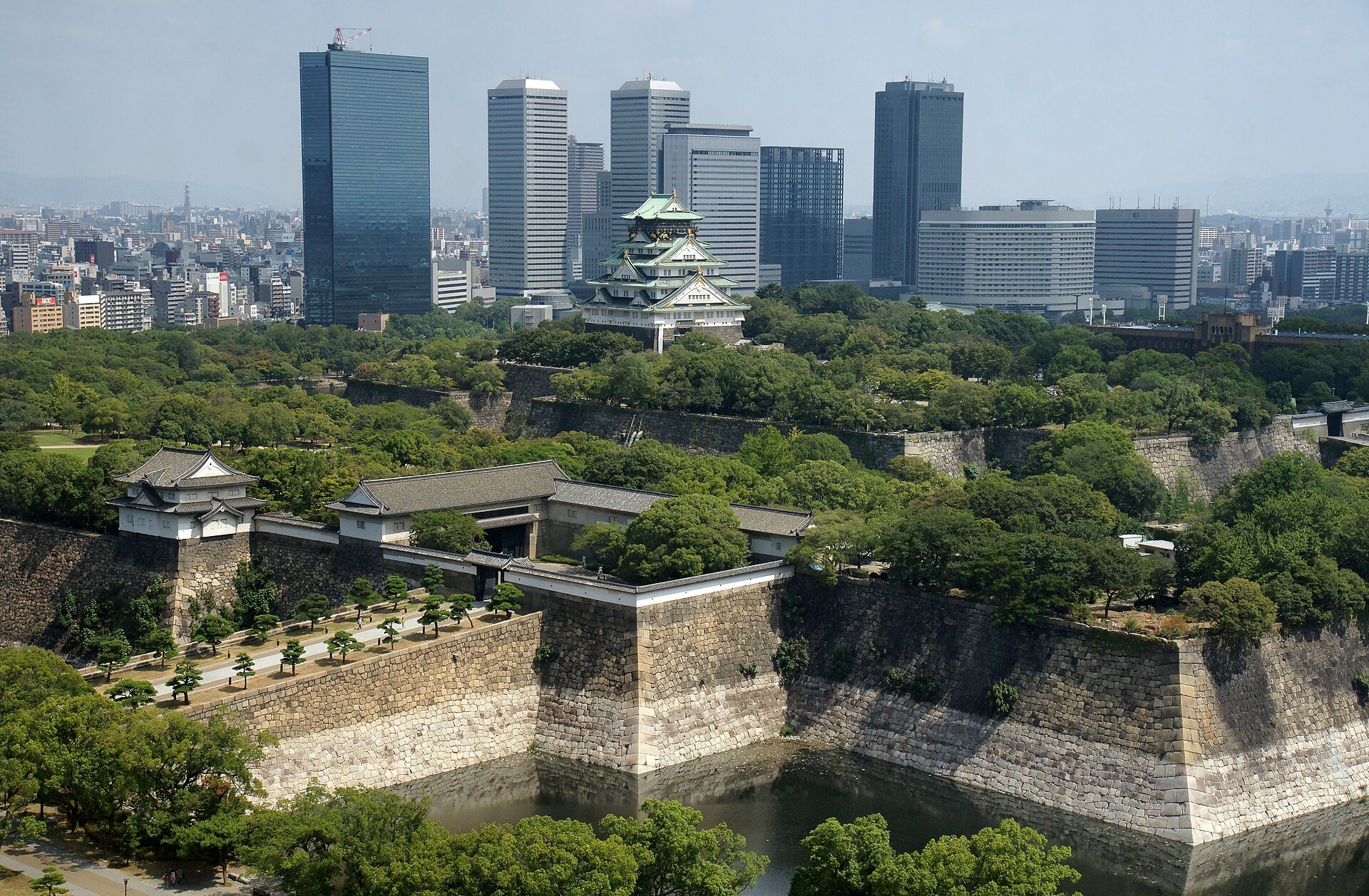
Start at Osaka Castle, the city’s symbol, rising from a sea of parkland in the middle of the business district. The keep you see is a 1930s reconstruction, but the museum inside tells the story properly — Toyotomi Hideyoshi, the warlord who unified Japan and built the original in the 1580s — and the view from the top floor takes in the whole Osaka plain. The stone walls below, some fitted from single boulders the size of houses, are the real 400-year-old article.
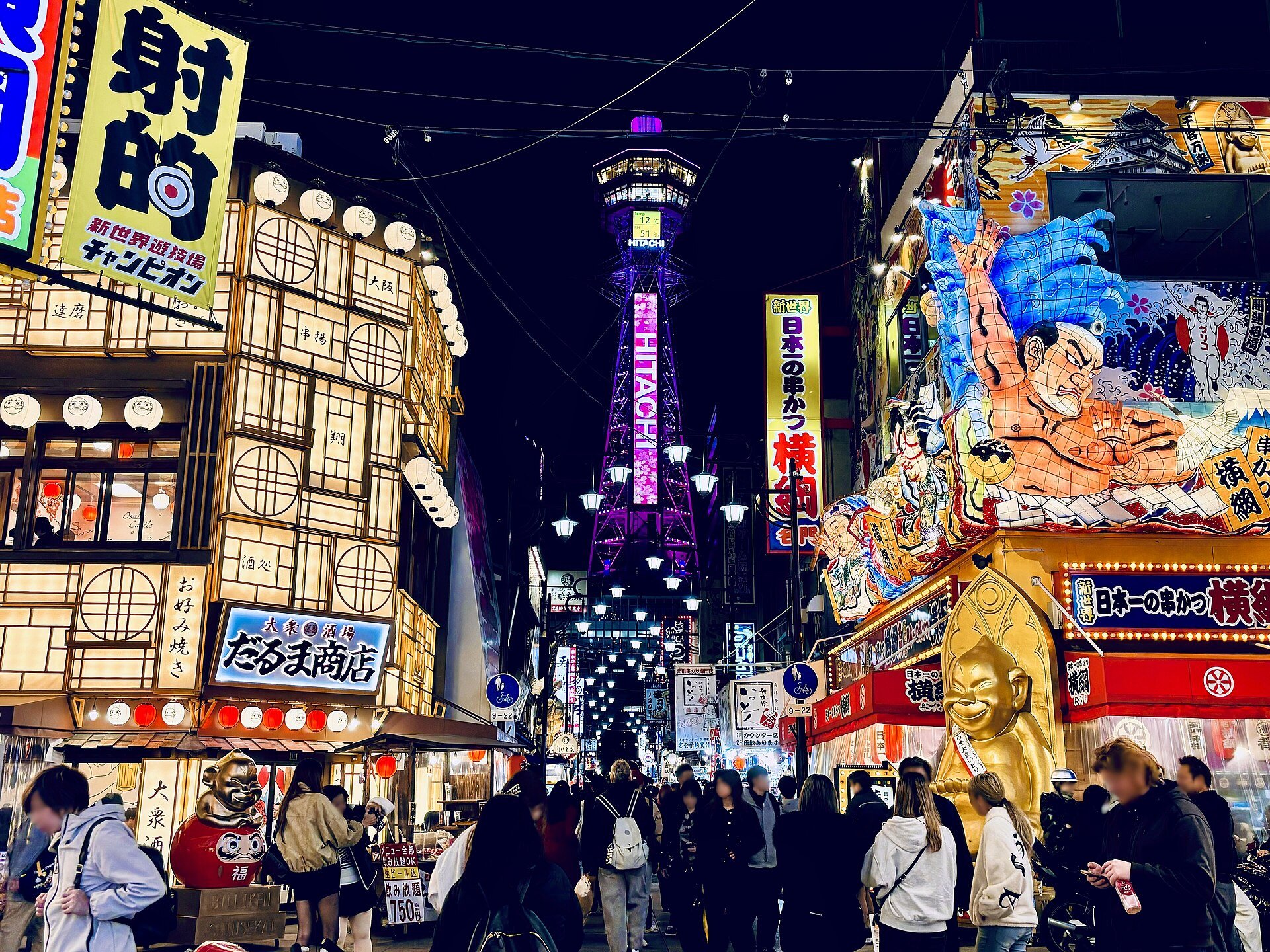
In the afternoon, walk Tenjinbashisuji — at over 2 kilometres, one of Japan’s longest shopping arcades — then head south to Shinsekai, a retro entertainment district built around Tsūtenkaku Tower in 1912 and proudly frozen in about 1960. The local ritual here is kushikatsu: skewers of meat, seafood, and vegetables, breaded and deep-fried, dipped once — never twice — in the communal sauce. Signs will remind you. Everyone obeys.
Day 2: Sky views, shopping streets, and the canal at dusk
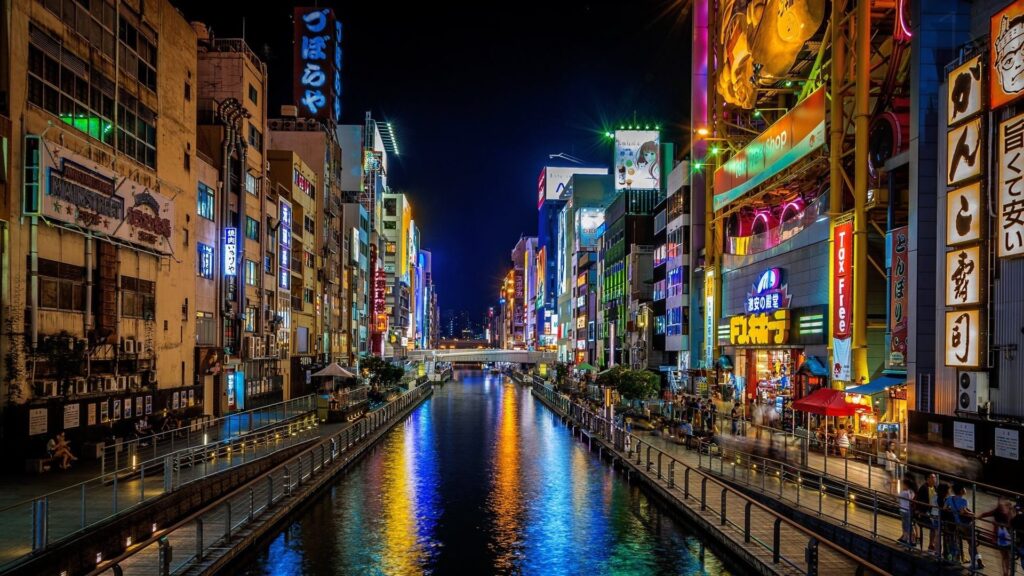
Begin in Umeda, Osaka’s modern northern hub, at the Umeda Sky Building — two towers joined at the top by a Floating Garden Observatory with an open-air deck. Drift south through the Shinsaibashi shopping streets as the afternoon fades, and time your arrival in Dōtonbori for dusk. The canal lights come on, the giant mechanical crab waves its claws, the Glico running man glows above Ebisu Bridge, and the food stalls hit their stride. This is the Osaka you’ve seen in photographs, except it smells much better.
Eat like it’s the itinerary
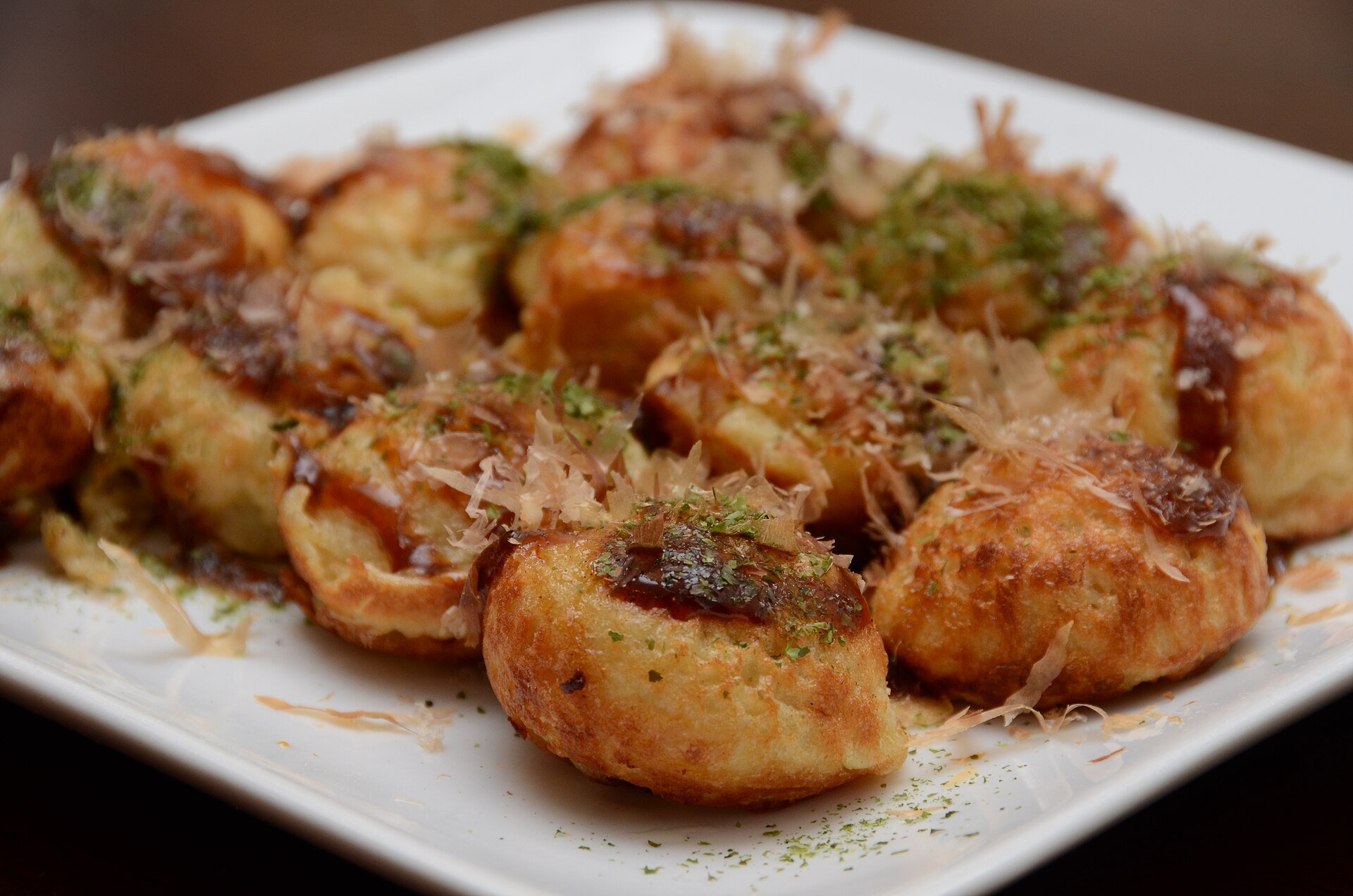
Osaka’s nickname is “the nation’s kitchen”, earned over centuries as Japan’s wholesale food hub. Work through the canon: takoyaki — octopus balls, crisp outside and molten inside, from a stall with a queue; okonomiyaki, the savoury cabbage pancake cooked on a griddle in front of you; kushikatsu in Shinsekai; and a fluffy jiggly cheesecake to carry onto the train. Portions are honest, prices are kind, and nobody in Osaka will judge you for planning the day around lunch. They’ll ask where you went.
Good to know
- The Midosuji subway line links Umeda and Namba in about ten minutes and covers most of this route.
- Osaka is the natural hub for the whole region: Kyoto, Nara, and Kobe are all easy day trips from here.
- Save Dōtonbori for the evening, every time. At noon it’s a canal; at dusk it’s a festival.
- With a third day, add the Osaka Aquarium Kaiyukan in the bay area and a slower morning in the Tenma food streets.
Sources & photo credits
- Osaka Castle — 663highland, CC BY 2.5, via Wikimedia Commons
- Shinsekai and Tsūtenkaku — Sakai Yayoi, CC0, via Wikimedia Commons
- Takoyaki — gaku., CC BY 2.0, via Wikimedia Commons