Kanazawa in 2 Days: Kenrokuen Garden, Samurai Streets and Gold Leaf
Kanazawa is the Japan that Kyoto used to be before the crowds found it. For 300 years the Maeda lords ruled one of the richest domains in the country from Kanazawa Castle, and they spent that wealth on gardens, craft and culture instead of war. The result is a compact city where a 17th-century garden, a samurai quarter and a working fish market all sit within a 15-minute bus ride of each other. Two days is the right amount of time: one for the garden, the castle and the old teahouse streets, and one for the samurai quarter, the market and the city’s modern side.
At a glance
- Time needed: 2 full days
- Getting there: Hokuriku Shinkansen Kagayaki, Tokyo → Kanazawa, about 2.5 hours, all seats reserved
- Where to stay: Near Kanazawa Station for connections, or Korinbo and Katamachi for evenings out
- Best season: Late March–April for cherry blossom, November for autumn leaves, February for snow
- Don’t miss: Kenrokuen at opening time, the Nomura-ke garden in Nagamachi, a kaisendon breakfast at Ōmichō Market
Day 1: The garden, the castle and the old town
9:30 — Arrive and drop your bags. The fastest Kagayaki leaves Tokyo at 7:20 and reaches Kanazawa at 9:44. Step out of the station under the Tsuzumi-mon gate — a huge wooden gate shaped like a hand drum — and take the Kanazawa Loop Bus from bay 7 at the East Gate. Buses run every 15 to 20 minutes in both directions, and a single ride costs ¥220. If you plan to ride more than three times in a day, buy the One Day Pass for ¥800 at the ticket counter inside the station; it covers the Loop Bus and local Hokutetsu buses, but it is not sold on board.
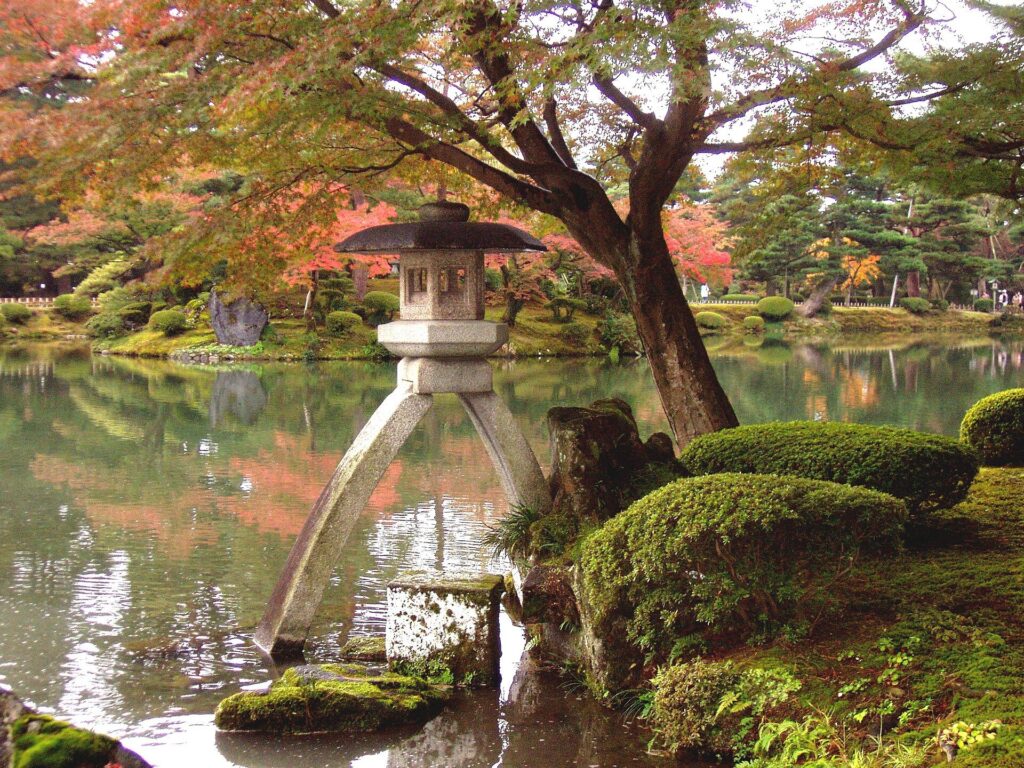
10:00 — Kenrokuen Garden. Start with the garden, while the light is soft and the tour groups are still at breakfast. Kenrokuen counts as one of Japan’s three great gardens, and it earns the title: ponds, streams, tea houses and pine trees shaped by centuries of pruning, all arranged so that every turn of the path opens a new composed view. The two-legged Kotoji stone lantern beside Kasumigaike pond is the garden’s symbol, and the oldest fountain in Japan still runs here on natural water pressure alone. Admission is ¥320 for adults, and the garden opens at 7:00 from March to mid-October and at 8:00 in the colder months. Come early and you can also use the free early-morning opening, when the gates open before the ticket counters do.
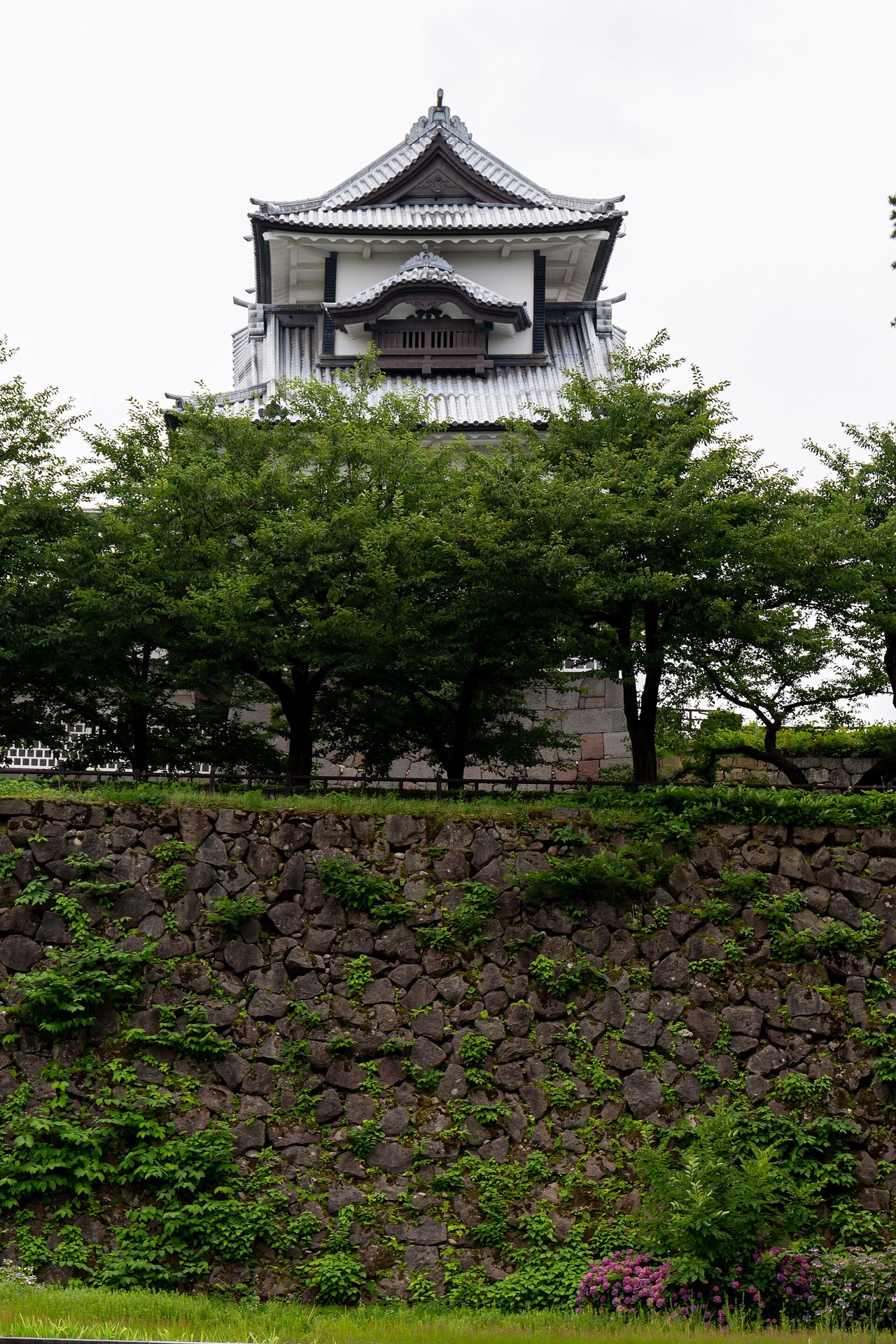
11:30 — Kanazawa Castle Park. Cross the road from Kenrokuen and you are in the castle grounds. The castle itself burned down long ago, but the park keeps the huge white walls, the moats and the Ishikawa-mon gate, which has stood since 1788. The grounds are free to walk, and the restored turrets — the diamond-shaped Hishi Yagura and the long Gojikken Nagaya warehouse — open to visitors for ¥320. Allow an hour for the walls and the views.
13:00 — Lunch in Kōrinbō. Ride the Loop Bus two stops to Kōrinbō, the shopping district between the castle and the samurai quarter. This is the practical heart of the city: department stores, noodle shops and cafes, plus the gold-leaf shops Kanazawa is famous for. The city makes nearly all of Japan’s gold leaf, and you will see it everywhere — on sweets, on cosmetics, and on soft-serve ice cream wrapped in a sheet of gold.
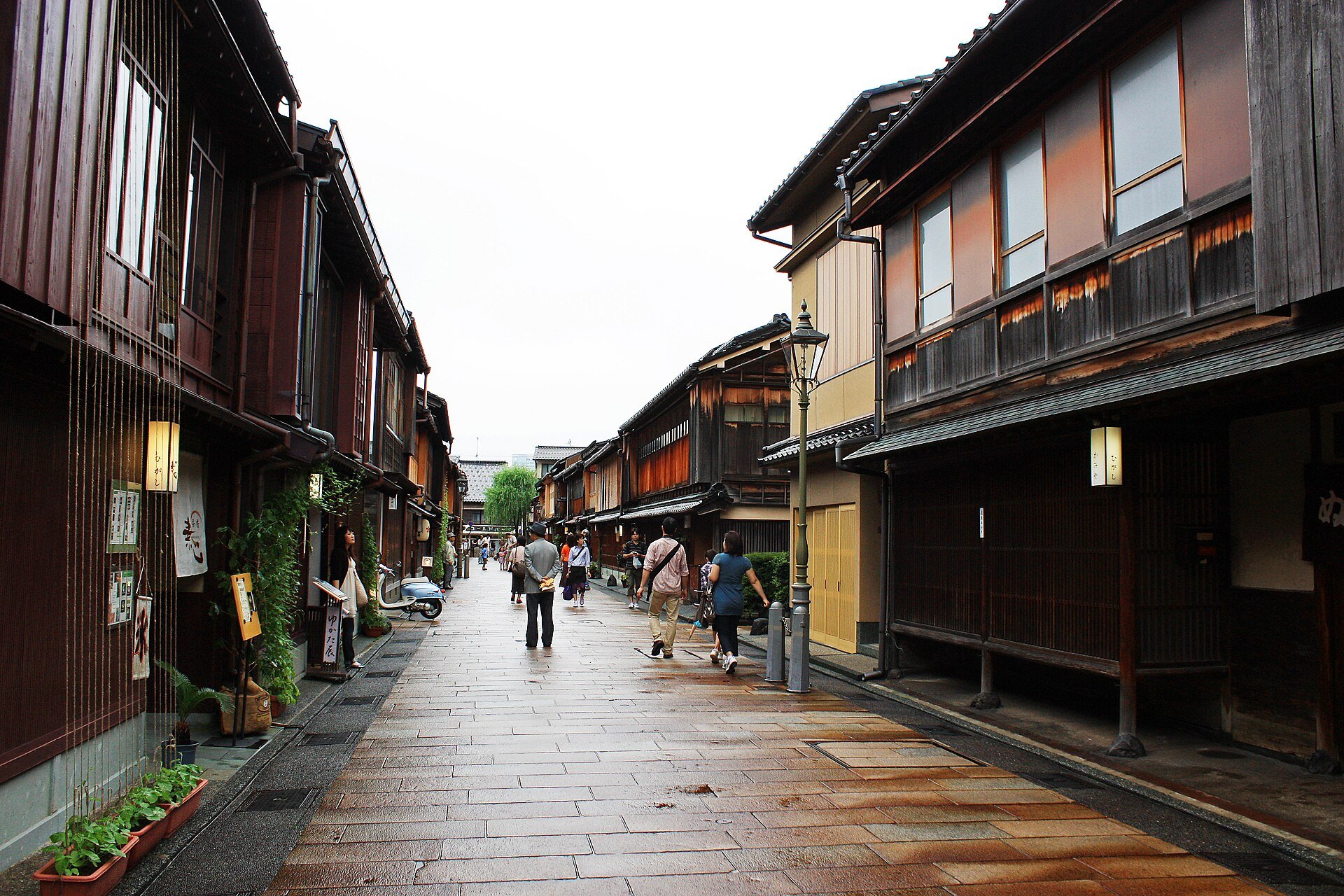
14:00 — Higashi Chaya District. Cross the Asano River to the city’s most photographed street. Higashi Chaya is a preserved geisha district of wooden teahouses with lattice fronts, and in the late afternoon the light turns the whole street amber. Two teahouses open to the public as museums — Shima, the district’s oldest, and Kaikaro — where you can see the small tatami rooms where geisha once entertained, and in Kaikaro’s case take tea in a gilded room. Give the district an unhurried hour. The side lanes are as beautiful as the main street and almost empty.
16:00 — 21st Century Museum of Contemporary Art. Walk back across the river and finish the day at the round glass building facing Kenrokuen. Half the museum is a free public zone, open until 22:00, and it includes the famous view down onto Leandro Erlich’s Swimming Pool — a full-size pool you look into from above, with people apparently walking on the water below. The ticketed exhibition zone closes at 18:00 (20:00 on Fridays and Saturdays) and is closed on Mondays. A special exhibition costs around ¥1,200; to step into the pool itself you need an exhibition ticket plus a same-day waiting number, issued from 9:00 on the day of your visit. One warning for future trips: the whole museum closes for renovation from 6 May 2027 until about March 2028.
18:30 — Dinner in Katamachi. End the day in Katamachi, the bar and restaurant district a short walk from Kōrinbō. Kanazawa’s food is its quiet boast: crab and sweet shrimp from the Sea of Japan, sake from local breweries, and oden — the simmered winter hotpot — served in tiny counters where the chef decides the menu. Many of the best places seat fewer than ten people and take no reservations, so arrive early and be ready to wait a little.
Day 2: Samurai streets, the market and the modern city
8:00 — Breakfast at Ōmichō Market. Start early at the city’s kitchen. Ōmichō Market has sold fish and produce to Kanazawa households for more than 300 years, and its covered lanes hold around 170 shops. Most stalls open around 9:00 and close by 17:00, but a few seafood counters start serving at 7:00 — that is when to come for a kaisendon, a bowl of rice topped with the morning’s catch, for roughly ¥1,200 to ¥3,000. Eat at the counter, not while walking: the market asks visitors not to eat on the move. Note that many stalls close on Wednesdays, and the whole market shuts over the New Year holidays.
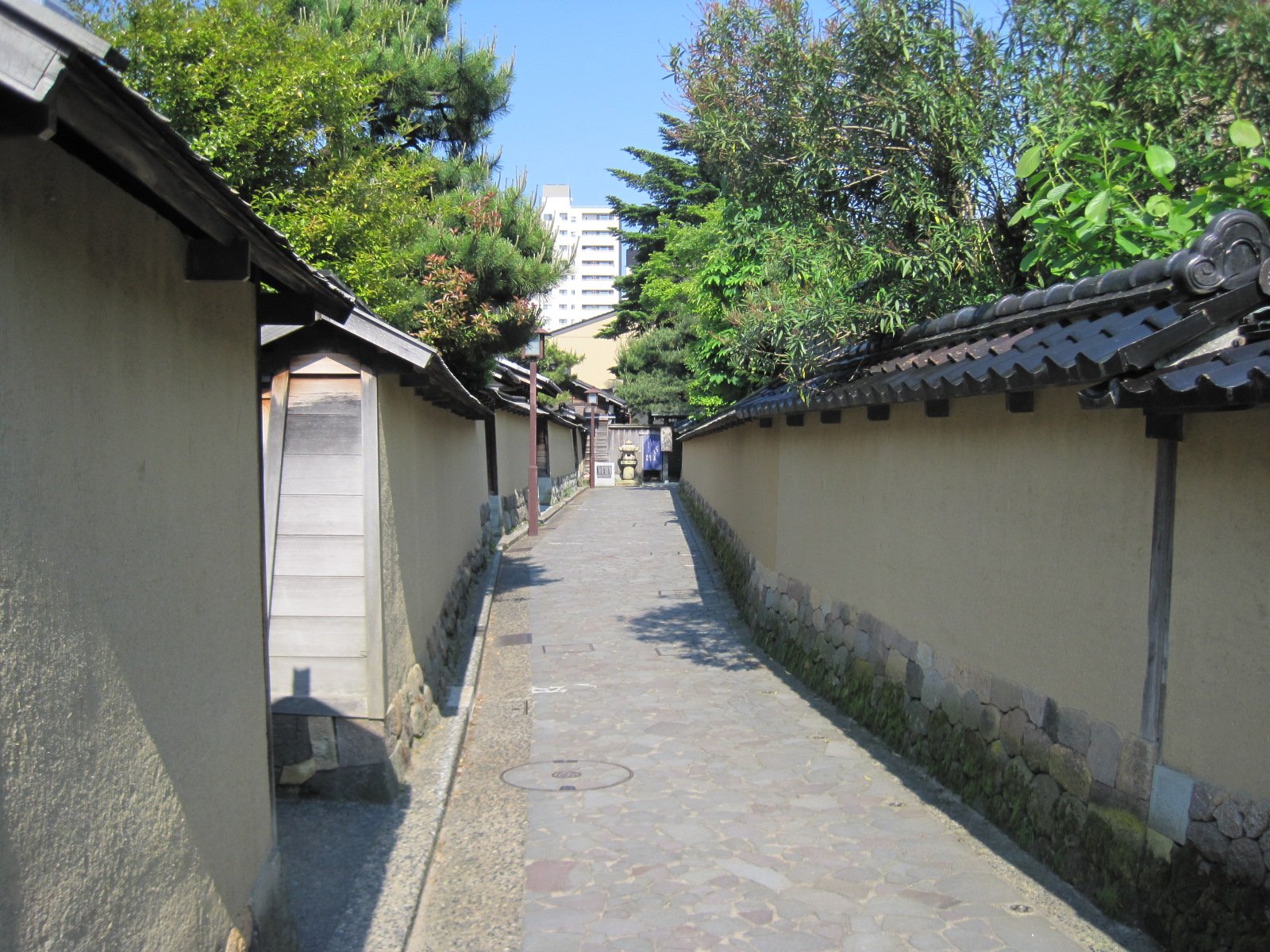
10:00 — Nagamachi Samurai District. A ten-minute walk from the market brings you to Nagamachi, where the Maeda lords’ middle-ranking samurai lived. The streets here are narrow and walled in yellow earth, with water running in stone channels along the lanes. Walking them is free, and it takes about an hour at a slow pace. The one house to enter is the Nomura-ke Samurai Residence, home to eleven generations of one samurai family. Inside are painted screens, swords and armour, and a small garden that the Michelin Green Guide gave two stars. Admission is ¥550 for adults, and the house is open 8:30 to 17:30 in the warmer months and until 16:30 from October to March. A bowl of matcha served in the upstairs tea room, looking over the garden, costs ¥300 extra and is worth it.
12:30 — Lunch and the craft streets. From Nagamachi it is a short walk to the Kaga Yuzen silk-dyeing workshops and the old soy-sauce district near the port, or back toward the station for a second look at the shops. If you want a sit-down lunch, this is the moment for Kanazawa’s other signature dish: Jibuni, a duck stew thickened with wheat gluten, served as a set meal in the older restaurants near the castle. Allow ¥1,500 to ¥2,500 for a good set lunch.
14:00 — The quieter museums. The afternoon is for the small places. The D.T. Suzuki Museum, a ten-minute walk from the 21st Century Museum, is a calm concrete-and-water memorial to the Zen philosopher who brought Buddhism to the West — it takes half an hour and resets the pace of the whole trip. Alternatively, the Ninja Temple (Myōryūji) in the Teramachi temple district hides trapdoors, secret staircases and a pit under the floor, but it only admits visitors on guided tours booked in advance by phone, so reserve before you travel if it is on your list.
16:00 — Gold leaf and the station. Use the last hours for the craft Kanazawa does best. The gold-leaf workshops around Higashi Chaya sell everything from chopsticks to face masks, and several let you try gilding a small plate or a pair of chopsticks yourself in about half an hour — a better souvenir than anything bought off a shelf. Then ride the Loop Bus back to the station, where the Tsuzumi-mon gate and the glass Motenashi Dome make a last photo stop. The fastest Kagayaki back to Tokyo leaves until 21:04, so there is no rush.
Budget for two days
Per person, not counting the Shinkansen to and from Kanazawa, and not counting the hotel.
| Item | Cost |
|---|---|
| Loop Bus One Day Pass × 2 days | ¥1,600 |
| Kenrokuen Garden | ¥320 |
| Kanazawa Castle turret interiors | ¥320 |
| Nomura-ke Samurai Residence | ¥550 |
| 21st Century Museum special exhibition | about ¥1,200 |
| Kaisendon breakfast + set lunches | about ¥4,000 |
| Dinners in Katamachi (2 nights) | about ¥5,000 |
| Snacks, coffee, gold-leaf soft serve | about ¥1,500 |
| Total | about ¥14,500 |
The Shinkansen from Tokyo costs about ¥14,400 one way for a reserved seat bought as an e-ticket. The Japan Rail Pass and the Hokuriku Arch Pass both cover the Kagayaki with free seat reservations, so a pass can pay for itself on this trip alone if Kanazawa is part of a wider journey.
If you have an extra day
Stay in Kanazawa and slow down. Start at the Nishi Chaya District, the smallest of the three teahouse quarters, then walk the Teramachi temple district, where a dozen temples line a single hillside street. In the afternoon, take the bus to the Ono district by the port, where soy-sauce breweries have worked for centuries. If you would rather leave the city, Shirakawa-gō, the village of steep thatched farmhouses, works as a day trip by highway bus; in winter its snow-covered roofs are the most photographed scene in the region, so book the bus ahead.
Frequently asked questions
Can I do Kanazawa in one day? Yes, but it is a long one. Follow the Day 1 route, skip the museum’s exhibition zone, and move the Nomura-ke house to the late afternoon. The garden and the teahouse district are the two things not to cut.
When is the best season? Late March to early April for cherry blossom in Kenrokuen, November for maple leaves, and February for snow — the garden’s pines wear yukitsuri, rope supports tied to protect the branches, all winter. Summer is hot and humid, but the garden is at its greenest.
Do I need cash? Mostly no. The garden and castle take cards and IC cards, and the Loop Bus pass is bought at a counter. But the small teahouse museums, the Nomura-ke house and the market stalls are often cash-only, so carry a few thousand yen in notes.
Is Kanazawa crowded? Much less than Kyoto. Kenrokuen and Higashi Chaya are busy on spring and autumn weekends, but on a weekday morning the garden is quiet, and Nagamachi rarely feels crowded.
Good to know
- The Loop Bus runs in two directions — the right loop reaches Higashi Chaya and Kenrokuen first, the left loop reaches Nagamachi and Katamachi first. Pick the direction that matches your next stop, not just the first bus that arrives.
- Kenrokuen and Kanazawa Castle Park share the same hours: 7:00–18:00 from March to mid-October, 8:00–17:00 in the colder months. Visit both in one morning while you are already there.
- The 21st Century Museum’s exhibition zone is closed on Mondays, and the whole museum closes for renovation from 6 May 2027 to about March 2028. The free public zone stays open until 22:00 on other days.
- Ōmichō Market is thinnest on Wednesdays, when many stalls close. Plan your market morning for another day.
- Winter in Kanazawa means rain and wet snow more often than postcard snowfall. Bring waterproof shoes and a coat you do not mind getting damp.
- Most small restaurants in Katamachi seat under ten people and do not take reservations. Arrive before 18:00 or be ready to queue.
Sources & photo credits
- Kenrokuen Garden hours and admission — Ishikawa Prefecture, Kanazawa Castle and Kenrokuen Management Office (checked 22 November 2026)
- Kanazawa Castle Park hours and admission — Ishikawa Prefecture (checked 22 November 2026)
- Kanazawa Loop Bus and One Day Pass — Hokuriku Railroad (checked 22 November 2026)
- 21st Century Museum of Contemporary Art, Kanazawa — hours, zones and renovation closure (checked 22 November 2026)
- Nomura-ke Samurai Residence — VISIT KANAZAWA official travel guide (checked 22 November 2026)
- Ōmichō Market hours — market listings (checked 22 November 2026)
- Tokyo–Kanazawa Shinkansen times and fares — JR West timetable and e-ticket prices (checked 22 November 2026)
- Kotoji lantern, Kenrokuen — Daderot, CC BY-SA 3.0, via Wikimedia Commons
- Kanazawa Castle — Balon Greyjoy, CC0, via Wikimedia Commons
- Higashi Chaya District — Andrea Schaffer, CC BY 2.0, via Wikimedia Commons
- Nagamachi Samurai District — Hirorinmasa, CC BY-SA 3.0, via Wikimedia Commons